Precision Hardware
Double Fold Self Locking Washers
Source double-fold wedge lock washers for vibration-resistant fastening applications. Explore metric sizes, material options, custom specifications, and bulk supply. Request a quote today.
Features
- Wedge-Locking Mechanism
- Enhanced Joint Security
- Resists loosening under strong vibration & dynamic load
- Various materials & sizes for bolted connections
Applications
Double-Fold Wedge Lock Washers – Custom Anti-Loosening Fastening Solutions
Double-Fold Wedge Lock Washers are designed to help prevent rotational loosening in bolted joints exposed to vibration, dynamic loads, and demanding industrial operating conditions. Available with multiple material and surface finish options, these specialized locking washers can be specified for general machinery, industrial equipment, marine applications, and selected high-temperature environments.
Looking for reliable wedge locking components for your next project? We offer flexible specification options, including S45C carbon steel, 65Mn spring steel, 304 stainless steel, 316 stainless steel, and A286 alloy, subject to design and manufacturing feasibility.
Request a Quote Today – Send Us Your Drawings, Material Requirements, and Order Quantity for a Customized Double-Fold Wedge Lock Washer Solution.
1. Product Overview
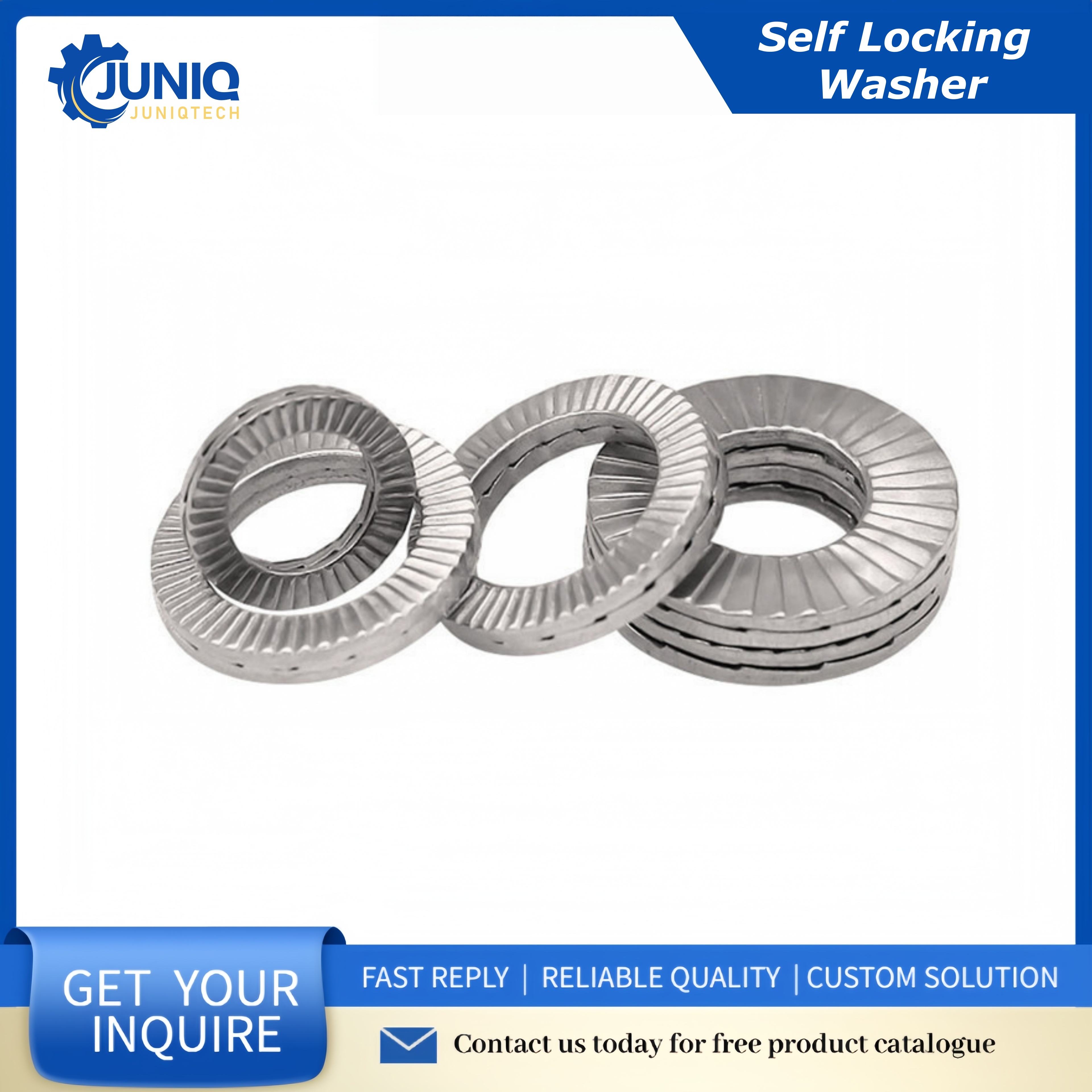
Double-Fold Wedge Lock Washers are specialized mechanical fastening components designed to improve the resistance of bolted joints to rotational loosening. By using a wedge-shaped locking mechanism and serrated contact interfaces, compatible designs help maintain joint integrity under vibration and repeated mechanical loading.
Unlike conventional flat washers, wedge-locking washers use specialized cam geometry to help increase bolt tension when relative rotation occurs across the locking interface. When correctly selected and installed, they can provide a reliable locking solution for demanding mechanical assemblies.
Our Double-Fold Wedge Lock Washers can be specified with different materials, dimensions, surface finishes, and packaging options to meet the requirements of industrial manufacturers, OEM customers, engineering contractors, and wholesale distributors.
Whether you need cost-effective carbon steel washers for general machinery, spring steel components for applications requiring elastic behavior, stainless steel washers for corrosion resistance, or A286 alloy solutions for elevated-temperature service, we can review your requirements and help identify a suitable specification.
Product Highlights
Wedge-locking design for improved resistance to rotational loosening.
Serrated contact surfaces for engagement with compatible mating components.
Multiple material options for different mechanical and environmental requirements.
Phosphate coating and zinc plating options for compatible steel components.
Custom dimensions and technical drawing review.
OEM, bulk order, and industrial distribution support.
Packaging and inspection requirements available for discussion.
2. Key Features of Double-Fold Wedge Lock Washers
2.1 Reliable Wedge-Locking Mechanism
The wedge-shaped cam surfaces are designed to resist rotational loosening in compatible bolted joints. When the joint experiences vibration or dynamic loading, the locking mechanism helps increase bolt tension when relative rotation occurs in the loosening direction.
2.2 Enhanced Fastening Security
Compared with conventional flat washers, a properly engineered wedge-locking design can provide improved resistance to rotational loosening under suitable conditions. This makes it a useful option for applications where maintaining bolt preload is important.
2.3 Multiple Material Choices
Different applications require different combinations of hardness, elasticity, corrosion resistance, and temperature performance. Available material options for evaluation include S45C carbon steel, 65Mn spring steel, 304 stainless steel, 316 stainless steel, and A286 alloy.
2.4 Corrosion Protection Options
Phosphate coating and zinc plating can be considered for compatible steel washers to support corrosion protection requirements. The appropriate finish depends on the base material, required mechanical properties, dimensional tolerances, and working environment.
2.5 Precision Dimensional Control
Inner diameter, outer diameter, thickness, and locking geometry can be specified according to the approved drawing or applicable product standard. Accurate dimensional matching helps improve installation compatibility and consistency.
2.6 Custom Manufacturing Support
For OEM and project-based requirements, custom specifications can be reviewed based on technical drawings, target quantities, material grades, surface finishes, and inspection requirements.
3. Advantages of Using Double-Fold Wedge Lock Washers
Reduced Risk of Vibration-Induced Loosening
Wedge-locking technology can help resist rotational loosening in properly designed joints exposed to vibration, cyclic loads, or mechanical movement.
Improved Equipment Reliability
Maintaining appropriate bolt preload helps support joint stability and may reduce maintenance associated with loose fasteners.
Flexible Material Selection
Choose from carbon steel, spring steel, stainless steel, or specialized alloy options according to the mechanical and environmental demands of your application.
Better Corrosion Protection
Select a suitable stainless steel grade or compatible surface treatment to address moisture, outdoor exposure, or more demanding corrosive conditions.
Customized Specifications
Define dimensions, materials, finishes, and packaging according to your equipment design and procurement requirements.
Efficient Industrial Sourcing
Consolidate your fastening requirements with a supplier that can review technical specifications, packaging needs, and bulk purchasing requirements together.
Need a washer that matches your exact application? Share your drawing, operating conditions, and expected quantity to start a technical review.
4. Technical Specifications
The following table provides a preliminary specification framework for Double-Fold Wedge Lock Washers. Actual dimensions, tolerances, material availability, and performance requirements must be confirmed against the selected design and approved drawing.
| Specification | Details |
|---|---|
| Product Name | Double-Fold Wedge Lock Washers |
| Product Type | Wedge-locking / anti-loosening washers |
| Primary Function | Help resist rotational loosening in compatible bolted joints |
| Nominal Bolt Sizes | M3–M24, subject to product design and availability |
| Inner Diameter | Drawing-specific; matched to the selected bolt size |
| Outer Diameter | Drawing-specific; determined by the locking design and available contact area |
| Washer Thickness | Drawing-specific; confirmed according to the selected configuration |
| Material Options | S45C carbon steel, 65Mn spring steel, 304 stainless steel, 316 stainless steel, A286 alloy |
| Carbon Steel Grade | S45C |
| Spring Steel Grade | 65Mn |
| Stainless Steel Grades | 304 / 316 |
| High-Temperature Alloy | A286, subject to manufacturing feasibility |
| Surface Treatment | Phosphate coating, zinc plating, or another agreed finish compatible with the base material |
| Hardness | According to material, heat treatment, design, and approved specification |
| Locking Structure | Wedge-shaped cam surfaces and serrated contact interfaces, according to the selected design |
| Dimensional Tolerance | According to the approved drawing or agreed product standard |
| Quality Inspection | Dimensional and material checks; mechanical and functional testing as agreed |
| Customization | Size, material, coating, marking, and packaging |
| Packaging | Bulk bags, cartons, labeled packaging, or customized arrangements |
| Supply Type | OEM, project-based orders, and bulk industrial supply, subject to confirmation |
Common Metric Size Reference
| Nominal Bolt Size | Typical Application | Dimensions to Confirm |
|---|---|---|
| M4 | Compact mechanical assemblies and instruments | Inner diameter, outer diameter, thickness |
| M6 | Electrical enclosures and light industrial machinery | Inner diameter, contact profile, coating |
| M8 | General industrial equipment | Dimensional fit, hardness, locking geometry |
| M10 | Machinery frames and mechanical assemblies | Material, contact surface, load requirements |
| M12 | Industrial equipment and mechanical systems | Washer geometry, preload requirements, finish |
| M16 | Heavy-duty machinery and equipment assemblies | Material properties, joint design, corrosion protection |
| M20 | Large mechanical assemblies | Drawing-specific dimensions and performance requirements |
| M24 | Heavy industrial equipment | Approved design, mechanical validation, and dimensional tolerances |
The sizes listed above are common metric bolt sizes for preliminary inquiry purposes. They do not represent guaranteed stock availability or confirm that every material and size combination can be manufactured.
Technical Note: The term “Double-Fold Wedge Lock Washer” may refer to different product constructions depending on the manufacturer. Please confirm whether your application requires a double-folded washer structure, a paired wedge-locking washer assembly, or another specific geometry. Final production should follow the approved drawing and applicable technical standard.
5. Materials and Surface Finishes
Our Double-Fold Wedge Lock Washers can be evaluated in different materials and surface finishes to meet varying requirements for mechanical strength, elastic behavior, corrosion resistance, and temperature performance.
5.1 Carbon Steel (S45C)
Cost-Effective Performance for General Industrial Use
S45C is a medium-carbon steel commonly considered for industrial components requiring a balance of cost efficiency, machinability, and achievable hardness after appropriate processing.
Key Benefits
Cost-effective material option for suitable industrial applications.
Good machinability and hardness potential after suitable heat treatment.
Suitable for applications where specified mechanical properties can be achieved through controlled processing.
Compatible with selected protective surface treatments.
Typical Applications
General industrial machinery.
Mechanical equipment assemblies.
Industrial fastening components.
Equipment where corrosion protection can be provided by an appropriate finish.
Recommended Finish: Phosphate coating or zinc plating, subject to compatibility with the product design and required mechanical properties.
Best For: Buyers prioritizing cost efficiency and suitable mechanical performance in general industrial environments.
5.2 Spring Steel (65Mn)
Elasticity Potential for Repeated-Load Applications
65Mn spring steel is commonly used for spring-type components where elastic behavior and resistance to repeated loading are important.
Key Benefits
Good elasticity potential after appropriate heat treatment.
Suitable for selected spring-type mechanical components.
Can support repeated loading requirements when the geometry and processing are properly controlled.
Useful for applications requiring specified hardness and wear resistance.
Typical Applications
Mechanical assemblies.
Industrial equipment.
Spring-type fastening components.
Selected applications involving repeated loading.
Recommended Consideration: Heat treatment, hardness, fatigue performance, and locking geometry should be defined according to the application.
Best For: Applications where resilient mechanical behavior is a key selection factor.
5.3 Stainless Steel 304
General Corrosion Resistance for Humid Environments
304 stainless steel offers useful corrosion resistance in many ordinary indoor, outdoor, and humid industrial environments.
Key Benefits
General corrosion resistance.
Suitable for many moisture-exposed applications.
Durable stainless steel appearance.
Useful for selected equipment and mechanical assemblies.
Typical Applications
Electrical enclosures.
Industrial machinery.
General equipment assemblies.
Selected indoor and outdoor fastening applications.
Best For: Applications requiring stainless steel corrosion resistance under ordinary environmental conditions.
Technical Consideration: Confirm the required hardness, product form, processing route, and locking performance. Standard 304 stainless steel should not automatically be assumed to provide the mechanical properties required for every wedge-locking design.
5.4 Stainless Steel 316
Enhanced Corrosion Resistance for Marine and Chemical Environments
316 stainless steel contains molybdenum, which improves resistance to certain forms of corrosion, particularly in many chloride-containing environments.
Key Benefits
Enhanced corrosion resistance compared with 304 in many relevant environments.
Suitable for evaluation in marine and coastal applications.
Can be considered for selected chemical-processing environments.
Useful where corrosion resistance is a major purchasing requirement.
Typical Applications
Marine equipment.
Coastal installations.
Selected chemical-processing equipment.
Industrial assemblies exposed to corrosive media.
Best For: Projects requiring enhanced corrosion resistance under demanding environmental conditions.
Technical Consideration: Chemical compatibility depends on the actual medium, concentration, temperature, and exposure duration. Mechanical properties and locking performance must also be confirmed.
5.5 A286 Alloy Steel
High-Temperature Performance for Thermal Cycling Applications
A286 is an iron-based, precipitation-hardening alloy used in demanding applications requiring elevated-temperature mechanical performance.
Key Benefits
Designed for elevated-temperature service.
Suitable for evaluation in thermal cycling applications.
Can provide a combination of mechanical strength and corrosion resistance under specified conditions.
Appropriate for specialized applications where conventional materials may not meet the required performance.
Typical Applications
Selected high-temperature industrial equipment.
Thermal systems.
Specialized mechanical assemblies.
Aerospace-related hardware where the required material and component approvals are met.
Best For: Applications requiring specialized alloy performance under elevated temperatures and changing thermal conditions.
Technical Consideration: Confirm the required operating temperature, material condition, heat treatment, mechanical properties, manufacturing feasibility, and industry qualification requirements before ordering.
5.6 Phosphate Coating
Surface Protection for Compatible Steel Components
Phosphate coating is a conversion coating that can support corrosion protection and surface preparation requirements.
Key Benefits
Suitable for selected carbon steel components.
Can support lubricant retention when specified.
Useful for certain general industrial applications.
Can be combined with supplementary protection, such as oil, when required.
Typical Applications
General industrial fastening components.
Selected mechanical assemblies.
Carbon steel washers requiring an agreed surface finish.
Corrosion performance depends on the phosphate system, supplementary treatment, and operating environment.
5.7 Zinc Plating
Sacrificial Corrosion Protection for Steel Washers
Zinc plating provides sacrificial corrosion protection for compatible steel components and is widely used for general industrial fastening applications.
Key Benefits
Helps protect compatible steel surfaces against corrosion.
Suitable for many indoor and general industrial environments.
Available in agreed coating specifications and finishes.
Can be selected according to appearance and corrosion requirements.
Typical Applications
Industrial machinery.
General mechanical assemblies.
Equipment fastening components.
Selected applications requiring cost-effective corrosion protection.
Technical Consideration: Coating thickness, dimensional effects, friction behavior, and hydrogen embrittlement risks for susceptible high-strength steel components must be evaluated where applicable.
5.8 Material Selection Comparison
| Material / Finish | Main Advantage | Recommended Environment | Main Consideration |
|---|---|---|---|
| S45C Carbon Steel | Cost efficiency and hardness potential | General industrial use | Heat treatment and corrosion protection |
| 65Mn Spring Steel | Elasticity potential and repeated loading | Spring-type mechanical applications | Fatigue performance and processing |
| 304 Stainless Steel | General corrosion resistance | Humid and ordinary industrial environments | Required hardness and locking performance |
| 316 Stainless Steel | Enhanced corrosion resistance | Marine and selected chemical environments | Specific chemical exposure |
| A286 Alloy | Elevated-temperature mechanical performance | Thermal cycling and specialized equipment | Material condition and qualification |
| Phosphate Coating | Conversion coating and potential lubricant retention | Compatible steel components | Supplementary protection and exposure |
| Zinc Plating | Sacrificial corrosion protection | General industrial environments | Coating requirements and embrittlement risk where applicable |
Not sure which material is right for your project? Provide your operating temperature, corrosion exposure, bolt size, and mechanical requirements. We can review the available options against your application.
6. Applications of Double-Fold Wedge Lock Washers
Industrial Machinery and Equipment
Suitable for evaluation in compatible bolted joints exposed to vibration, dynamic loads, and repeated mechanical movement.
Automotive and Transportation Equipment
Can be considered for specified fastening applications, subject to automotive requirements, joint validation, and applicable approvals.
Marine and Coastal Equipment
316 stainless steel may be considered for compatible applications where enhanced corrosion resistance is required.
Chemical Processing Equipment
Material selection should account for chemical composition, concentration, temperature, exposure duration, and the required mechanical properties.
Power Generation and Energy Equipment
Suitable configurations can be evaluated for selected machinery and industrial equipment connections, depending on the loading and environmental conditions.
High-Temperature Industrial Systems
A286 alloy may be considered for specialized applications involving elevated temperatures and thermal cycling, subject to design and qualification requirements.
Agricultural and Mining Machinery
Compatible wedge-locking designs may help resist loosening in equipment exposed to vibration, shock, and demanding operating conditions.
Electrical and Industrial Enclosures
304 stainless steel or appropriately protected carbon steel may be considered for compatible fastening points, depending on moisture exposure and joint requirements.
Construction and Infrastructure Equipment
Can be evaluated for suitable mechanical assemblies and equipment connections where vibration resistance and secure fastening are important.
For safety-critical, regulated, or certified applications, the selected washer must meet the relevant industry specifications, qualification procedures, and engineering requirements.
7. Installation and Usage Instructions
Correct installation is essential to achieving the intended locking performance of Double-Fold Wedge Lock Washers.
Step 1: Confirm Product Compatibility
Verify the bolt size, washer dimensions, material, surface finish, and joint design. Ensure that the selected locking mechanism is suitable for the mating components.
Step 2: Inspect the Contact Surfaces
Check that the mating surfaces are clean and suitable for the washer's serrated interfaces. Soft substrates, unsuitable coatings, or excessive surface irregularities may affect engagement.
Step 3: Install According to the Product Design
Position the washer according to the approved drawing and manufacturer's instructions. For paired wedge-locking assemblies, ensure that the cam surfaces face each other as specified.
Step 4: Apply the Required Tightening Torque
Use the torque or bolt-preload specification defined by the joint designer or equipment manufacturer. Do not assume one universal torque value for all sizes, materials, coatings, and operating conditions.
Step 5: Verify the Assembly
Confirm correct seating, fastener engagement, and compliance with the applicable installation procedure. Critical applications may require additional inspection or functional testing.
Step 6: Inspect During Maintenance
After disassembly, inspect for wear, deformation, corrosion, and damage. Reuse only when permitted by the manufacturer's instructions and the application specification.
Installation Reminder: Wedge lock washers support joint security but do not replace correct bolt selection, joint design, appropriate preload, or application-specific validation.
8. Quality Control and Product Inspection
Consistent quality is important for industrial fastening components. Inspection requirements can be agreed before production and may include the following:
Dimensional inspection: Inner diameter, outer diameter, thickness, and other drawing-defined dimensions.
Material verification: Material grade and supporting documentation as agreed.
Mechanical inspection: Hardness and other specified mechanical properties.
Heat-treatment verification: Relevant processing records or testing where required.
Surface inspection: Coating appearance, surface condition, and visible defects.
Functional testing: Applicable locking-performance tests according to the specified design and test method.
Documentation: Inspection reports, material certificates, and other agreed records, subject to availability.
For orders requiring a specific international standard, customer specification, third-party inspection, or industry qualification, please provide the relevant requirements before quotation.
9. OEM Customization and Bulk Supply
We understand that industrial buyers often require more than standard dimensions. Our Double-Fold Wedge Lock Washer specifications can be reviewed for project-specific sourcing and customization.
Customization Options
Nominal bolt size and washer dimensions.
Material grade and required processing condition.
Phosphate coating, zinc plating, or other agreed finish.
Drawing-based dimensional requirements.
Product marking and packaging labels.
Bulk packaging and quantity-per-carton requirements.
Agreed inspection and documentation requirements.
OEM Ordering Process
Submit your product drawing or technical specification.
Confirm material, surface finish, dimensions, and quantity.
Review the proposed specification and manufacturing feasibility.
Agree on inspection requirements, packaging, and delivery terms.
Proceed according to the confirmed quotation and order conditions.
Customization, samples, minimum order quantities, and lead times are subject to product design and production confirmation.
10. Packaging and Shipping
We support packaging arrangements according to product size, order volume, labeling requirements, and destination.
Packaging Options
Bulk packaging in suitable bags or cartons.
Inner bags with labeled outer cartons.
Size-separated packaging for easier warehouse management.
Labels showing agreed part numbers, dimensions, material, or batch information.
Palletized export packaging where appropriate.
Customized OEM packaging subject to confirmation.
Shipping Options
Depending on order volume, destination, schedule, and logistics feasibility, shipping can be arranged through:
Express courier for suitable small shipments.
Air freight for time-sensitive orders.
Sea freight for suitable bulk shipments.
Other agreed transportation arrangements.
Information to Confirm Before Shipment
Final product specification and approved drawing.
Order quantity and packaging configuration.
Carton dimensions and gross/net weight, where applicable.
Labeling and traceability requirements.
Delivery address and requested shipping method.
Required shipping and inspection documentation.
Planning a bulk purchase? Share your estimated quantity, destination, and preferred delivery schedule to discuss suitable packaging and shipping arrangements.
11. Why Choose Us for Double-Fold Wedge Lock Washers?
Specification-Focused Sourcing
We prioritize clear technical requirements, drawing review, and specification confirmation to reduce the risk of product mismatches.
Flexible Material Options
Discuss S45C, 65Mn, 304, 316, and A286 options according to the required mechanical properties, corrosion exposure, and operating temperature.
Customization Support
We can review project-specific requirements for dimensions, finishes, marking, and packaging, subject to manufacturing feasibility.
Quality Requirements Defined in Advance
Dimensional inspection, material verification, mechanical testing, and supporting documentation can be discussed before order confirmation.
Support for Industrial and OEM Buyers
We welcome inquiries from manufacturers, distributors, engineering contractors, maintenance suppliers, and industrial purchasing teams.
Clear Quotation Process
Providing a drawing, material grade, surface finish, and estimated quantity helps us review your requirements and prepare a more relevant quotation.
Our goal is to help you source fastening components with greater specification clarity, more efficient procurement, and an appropriate technical match for your application.
12. Frequently Asked Questions (FAQ)
Q1: What are Double-Fold Wedge Lock Washers used for?
They are designed to help resist rotational loosening in compatible bolted joints exposed to vibration or dynamic loading. Actual performance depends on the washer design, installation, joint conditions, and application requirements.
Q2: What is the difference between wedge lock washers and flat washers?
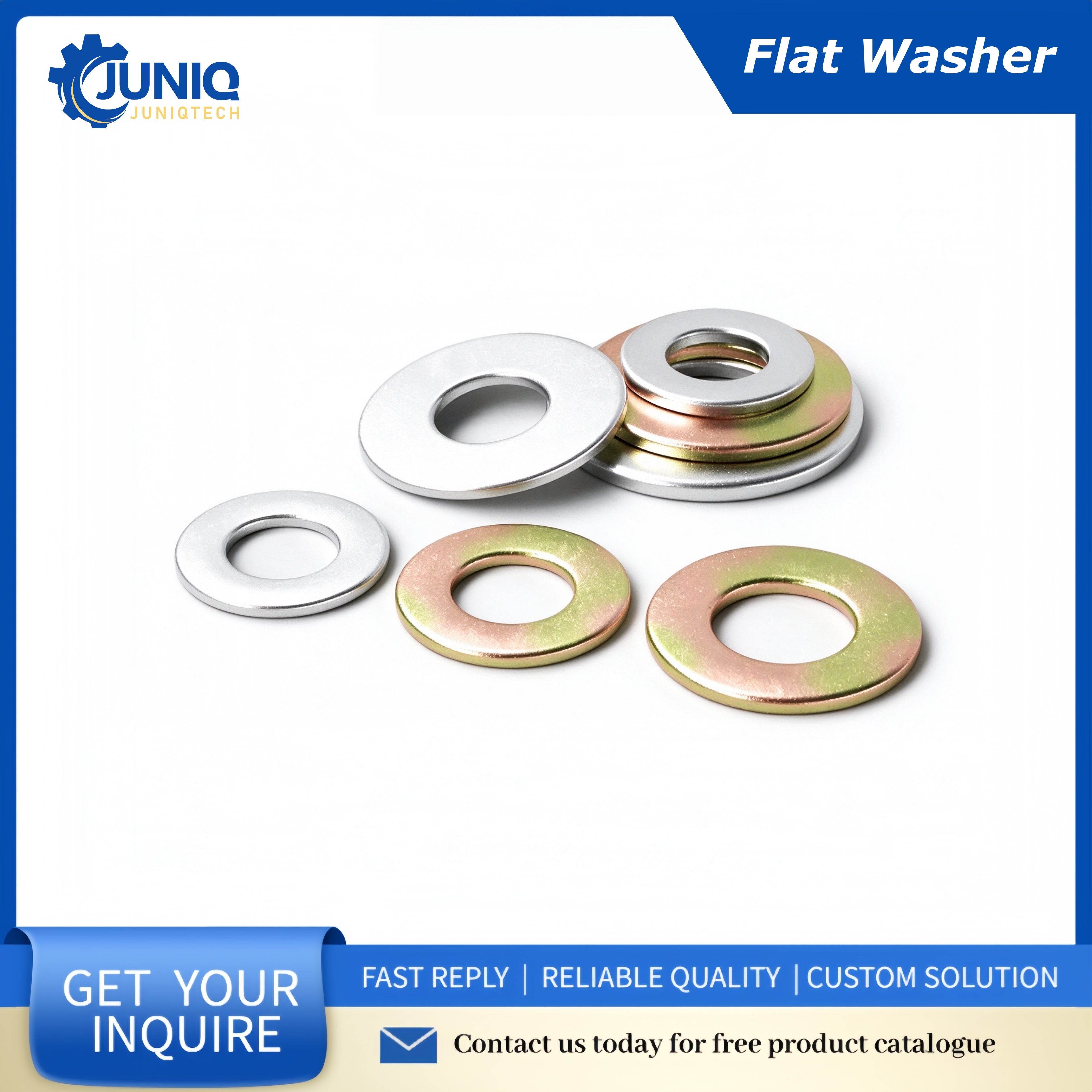
Flat washers primarily distribute load or protect mating surfaces. Wedge lock washers use specialized cam geometry and serrated interfaces to help resist rotational loosening under suitable conditions.
Q3: Which materials are available?
Potential options include S45C carbon steel, 65Mn spring steel, 304 stainless steel, 316 stainless steel, and A286 alloy. Availability and suitability depend on the selected product design and manufacturing requirements.
Q4: What is the difference between S45C and 65Mn?
S45C is a medium-carbon steel often selected for cost-effective industrial components requiring suitable strength and hardness after processing. 65Mn is a spring steel commonly considered for applications where elastic behavior and repeated loading are important. The final choice depends on the product geometry, heat treatment, and required mechanical performance.
Q5: Should I choose 304 or 316 stainless steel?
304 is often suitable for general humid environments and many ordinary industrial applications. 316 offers enhanced resistance to many chloride-containing and corrosive environments. Both grades must also meet the mechanical and locking requirements of the selected washer design.
Q6: Can A286 be used for high-temperature applications?
A286 is designed for elevated-temperature mechanical service. However, the suitability of a specific washer depends on operating temperature, thermal cycling, material condition, mechanical loading, and qualification requirements. Please provide your working temperature and technical specification for review.
Q7: What is the difference between phosphate coating and zinc plating?
Phosphate coating is a conversion coating that may be used with supplementary protection, while zinc plating provides sacrificial corrosion protection for compatible steel components. The appropriate choice depends on the base material, corrosion requirements, and application environment.
Q8: Can I request custom sizes?
Custom sizes can be reviewed according to your technical drawing, target dimensions, material, and order quantity. Manufacturing feasibility and any minimum order requirements must be confirmed.
Q9: Are these washers suitable for marine environments?
316 stainless steel may be suitable for many marine and coastal applications, depending on exposure conditions. More demanding environments require a detailed material compatibility assessment and verification of the required locking performance.
Q10: Can wedge lock washers be reused?
Reuse depends on the product design, condition, and manufacturer instructions. Washers showing wear, deformation, corrosion, or damage should not be reused unless explicitly permitted by the applicable specification.
Q11: Do you provide samples before bulk orders?
Sample availability can be discussed according to the selected specification, customization requirements, and project stage. Include your target size and estimated order quantity in your inquiry.
Q12: What is the minimum order quantity (MOQ)?
MOQ depends on the product size, material, surface finish, customization requirements, and production process. Contact us with your estimated quantity so the applicable order conditions can be confirmed.
Q13: What information should I provide to receive a quotation?
For a faster and more accurate quotation, please provide:
Nominal bolt size and required washer dimensions.
Product drawing or technical specification.
Material grade: S45C, 65Mn, 304, 316, or A286.
Surface finish requirements.
Operating temperature and environmental conditions.
Estimated quantity and purchasing frequency.
Destination, packaging preferences, and required documentation.
Q14: Can you provide material certificates and inspection reports?
Documentation requirements can be reviewed before order confirmation. Please specify the required certificates, test reports, standards, and inspection procedures so availability can be confirmed.
13. Request a Quote for Double-Fold Wedge Lock Washers
Looking for a reliable sourcing partner for Double-Fold Wedge Lock Washers?
Whether you need carbon steel washers for general machinery, spring steel components for repeated-load applications, stainless steel washers for corrosion resistance, or A286 alloy solutions for specialized high-temperature service, we welcome your inquiry.
Tell Us About Your Project
To help us evaluate your requirements, please provide:
Product Size: Required nominal bolt size and washer dimensions.
Material: S45C, 65Mn, 304 stainless steel, 316 stainless steel, or A286.
Surface Finish: Phosphate coating, zinc plating, or another specified finish.
Quantity: Sample quantity, trial order, or estimated bulk demand.
Application: Equipment type, operating temperature, and environmental conditions.
Documentation: Required inspection reports, certificates, or applicable standards.
Delivery: Destination and preferred shipping arrangement.
Get Your Customized Quotation Today
Send us your drawings and purchasing requirements for a specification review. We can discuss product compatibility, material options, customization feasibility, packaging, and quotation details.
Double-Fold Wedge Lock Washers – Custom Materials, Flexible Specifications, and Industrial Fastening Solutions. Contact Us Today to Discuss Your Requirements and Request a Quote.
FAQ
Frequently Asked Questions
Need a Suitable Solution?
Send us your requirements and our engineers will recommend the right product for your needs.